Removing backgrounds from images used to be a time-consuming task reserved for professional designers. In 2026, things are very different. With powerful AI tools, anyone—from beginners to business owners—can remove backgrounds in seconds without technical skills.
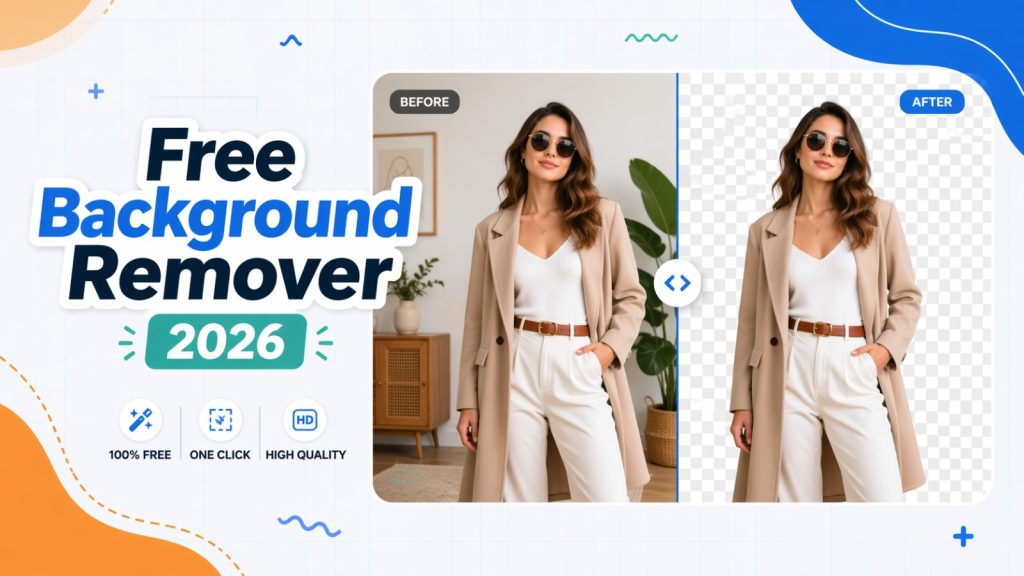
If you’re looking to learn how to remove image background, choose the right tools, and get clean, professional results, this guide covers everything step by step.
Table of Contents
- What Is a Background Remover?
- Why Background Removal Matters in 2026
- How AI Background Remover Tools Work
- Step-by-Step: How to Remove Background Online Free
- Manual Editing vs AI Background Removal
- Tips for Cleaner Transparent Backgrounds
- Common Beginner Mistakes
- PNG Transparency & Export Formats
- Real-World Examples
- Conclusion
- FAQs
What Is a Background Remover?
A backdrop remover is a digital tool, usually AI-driven, that separates the main subject of a picture from the background and removes it. Most of the time, the output is a PNG file with a transparent backdrop or a picture with a new background.
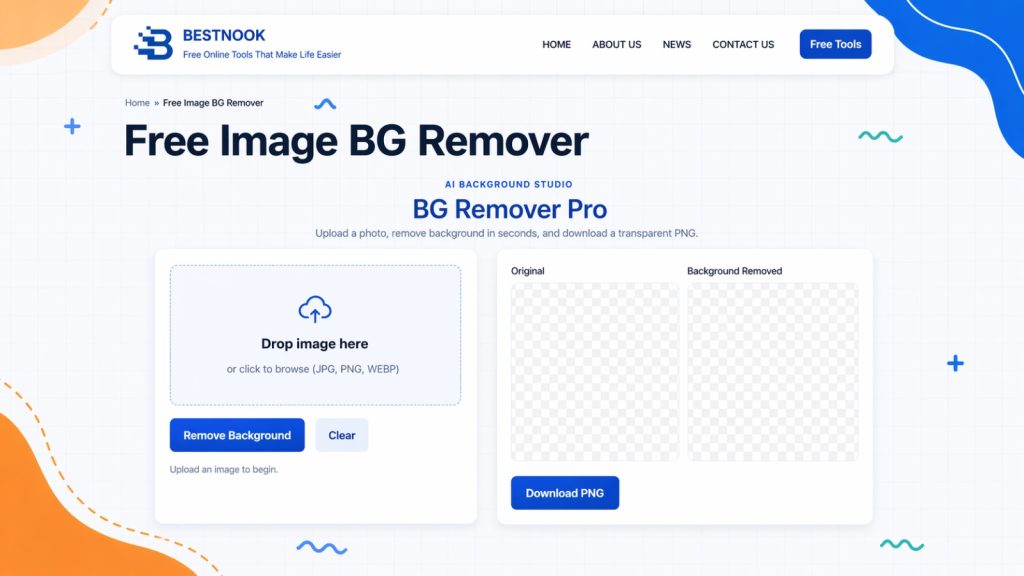
To detect edges, objects, and depth, modern background removers use machine learning models, particularly computer vision techniques such as semantic segmentation. Older tools, like the lasso and pen tool, needed you to choose things by hand. Today’s tools do it automatically in seconds.
Key Functions:
- Finding the subject (person, thing, or product)
- Removing the background (automatically or by hand)
- Smoothing off the edges and keeping the hair details
- Effects that change or blur the background
Common Use Cases:
- Pictures of products for e-commerce
- Graphics for social media
- Creative marketing
- Pictures of your profile
- Ads and thumbnails
Why Background Removal Matters in 2026
Digital platforms are full of visual content in 2026. Images that are clean and free of distractions are no longer optional; they are a conversion factor.
Key Reasons:
1. E-commerce Optimization
Platforms like product photos that are clear and have backgrounds that are neutral or see-through. This makes things better:
- Rate of clicks (CTR)
- Rate of conversion
- Consistency in visuals
2. AI-Driven Content Creation
As AI technologies become more popular, creators can make a lot of content. Removing the background makes it easy to change and reuse things quickly
.
3. Branding Consistency
Businesses keep their images the same across:
- Ads on websites
- Websites for social media
4. Mobile-First Consumption
On small screens, backgrounds that are too busy make things less clear. Clean images make users more likely to interact.
5. SEO & Visual Search
More and more, search engines utilize picture recognition. Images that are clear and focused on the subject make indexing and finding things easier.
How AI Background Remover Tools Work
Deep learning models based on millions of photos are what modern technologies use.
Process Breakdown
1. Input Image
The user uploads a picture (JPG, PNG, or WebP).
2. Object Detection
AI uses training datasets to find the main subject.
3. Segmentation
The image is divided into:
- The picture is split into
- Foreground (topic) Background
4. Edge Refinement
Advance models refine:
- Advanced models improve:
- Strands of hair
- Fine edges and shadows
5. Output Generation
Final output is created:
- The final output is made:
- PNG with no color
- New background added
- Edited composite
Technologies Used:
- CNNs, or Convolutional Neural Networks
- Architectures for U-Net and Mask R-CNN
- Algorithms for processing in real time
Step-by-Step: How to Remove Background Online Free
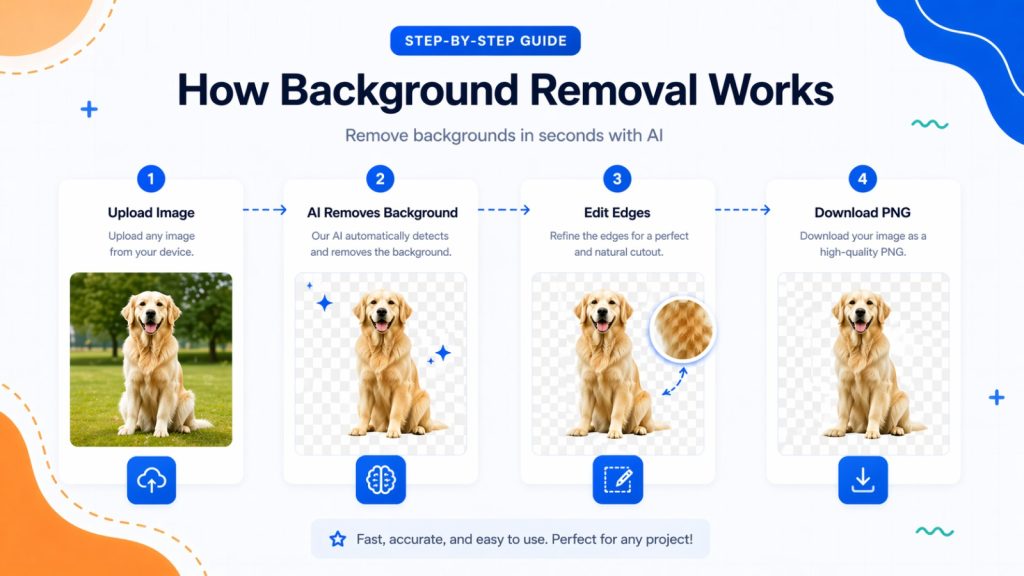
Step 1: Choose a Tool
Choose a free online tool to erase the backdrop.
Step 2: Upload image
You can drag and drop or upload from your device.
Step 3: Automatic Processing
AI takes away the background right away, usually in a few seconds.
Step 4: Refine Edges
Use built-in tools to:
- Bring back erased bits
- Get rid of parts you don’t want
- Change the edges
Step 5: (Optional) Add a New Background
Choose:
- Single color
- Gradient
- Image of your choice
Step 6: Download
Export as:
- PNG (with no backdrop)
- JPG (with background)
Manual Editing vs AI Background Removal
| Feature | Al Removal | Manual Editing |
| Speed | Instant | Time Consuming |
| Skill Required | None | High |
| Accuracy | High(most cases) | Very high(if expert) |
| Edge Detail | Good | Excellent |
| Best For | Bulk, quick edits | Precision work |
When to Use AI:
- Processing images in bulk
- Content for social media lists of products
When to Use Manual:
- Difficult backgrounds
- Fine detail work (like hair and glass)
- Design projects for work
- How to Make Transparent Backgrounds Look Cleaner
Tips for Cleaner Transparent Backgrounds
1. Use High-Resolution Images
AI is less accurate when images are of low quality.
2. Choose Contrast-Friendly Photos
The subject should be different from the surroundings.
3. Avoid Busy Backgrounds
Detection is better with simpler backgrounds.
4. Refine Edges Manually
Always look:
- The margins of hair
- Shadows
- Good outlines
5. Adjust Brightness/Contrast Before Upload
Improves the ability to find subjects.
6. Use Soft Edge Tools
Stops outlines from being jagged or unnatural.
Common Beginner Mistakes
1. Using Low-Quality Images
Cutouts that are fuzzy or wrong.
2. Ignoring Edge Cleanup
Makes the visuals look rough and amateurish.
3. Wrong Export Format
When you save as JPG, the transparency goes away.
4. Over-Sharpening
Makes outlines that don’t seem right.
5. Poor Background Replacement
Lighting and perspective don’t match up.
6. Not Checking Zoomed View
When you zoom in, mistakes often show up.
PNG Transparency and Export Formats
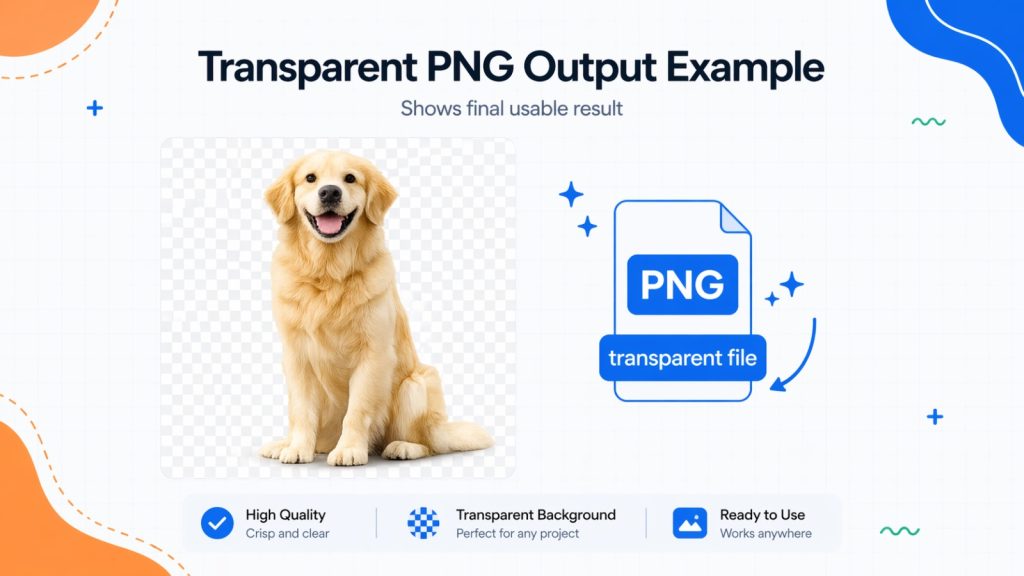
PNG (Recommended)
- Supports transparency
- High quality
- Best for design and web use
JPG
- No transparency
- Smaller file size
- Suitable for final images with background
WebP
- Smaller size than PNG
- Supports transparency
- Ideal for web performance
SVG (Vector – Rare Use Case)
- Used for logos
- Not typical for photo backgrounds
Best Practice:
- Use PNG for editing
- Convert to WebP for website optimization
Real-World Examples
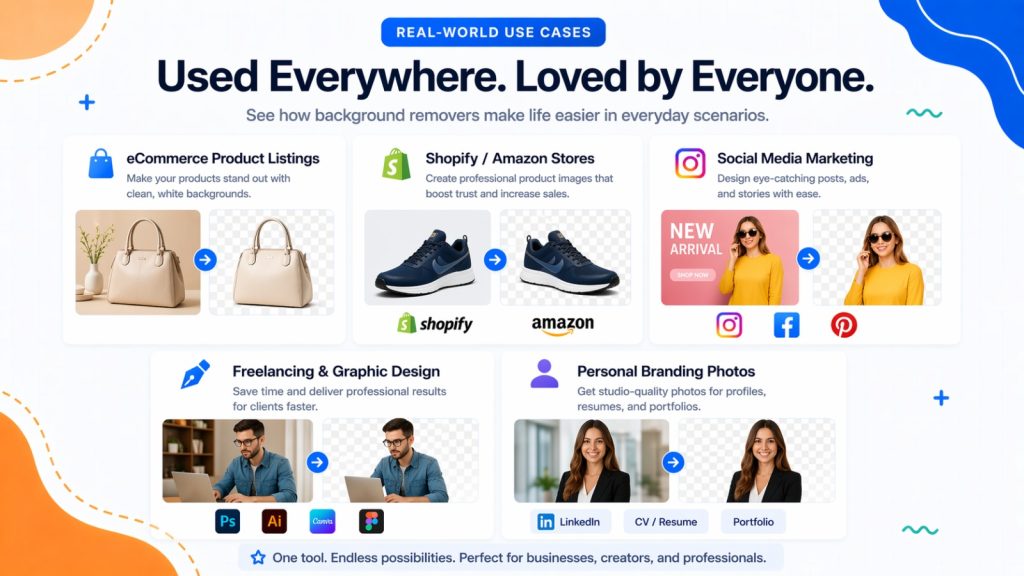
1. E-commerce Product Listing
Before: Cluttered background
After: Clean white or transparent background
Result: Higher conversion rate
2. Social Media Marketing
Before: Distracting visuals
After: Subject-focused design
Result: Better engagement
3. YouTube Thumbnails
Before: Blended background
After: Bold subject separation
Result: Increased click-through rate
4. Personal Branding
Before: Casual photo
After: Professional headshot
Result: Stronger credibility
Final Thoughts
Background removal has evolved from a manual, time-intensive task into a fast, AI-powered process accessible to everyone. In 2026, it plays a critical role in:
- Visual marketing
- E-commerce success
- Content creation at scale
Using the right tools, formats, and techniques ensures clean, professional, and high-performing visuals. Whether you’re a beginner or scaling a business, mastering background removal gives a clear competitive edge.
Frequently Asked Questions
Is background removal really free?
Yes, many tools offer free versions with basic features. Some may limit resolution or downloads.
What is the best format for transparent images?
PNG is the most widely used and supported format.
Can AI remove complex backgrounds?
Yes, but results may require manual refinement for complex scenes.
Does background removal reduce image quality?
Not if exported correctly in high resolution.
Can I use background remover tools on mobile?
Yes, most tools are mobile-friendly or have dedicated apps.
How do I get perfect edges?
Use high-quality images and refine edges manually after AI processing.