There are digital documents everywhere in 2026. PDFs are the standard document format now, whether you’re a student turning in homework, a freelancer sending out proposals, a business maintaining contracts, or an internet seller dealing with bills.
But here’s the problem:
PDFs are fantastic for distributing files, but they can be hard to change.
That’s when a free PDF converter 2026 tool is quite useful.
With today’s online PDF converter tools that use AI, you can quickly.
Table of Contents
- What Is a PDF Converter?
- How Online PDF Converters Work
- Why People Use PDF Conversion Tools
- Common File Formats Explained
- How to Convert PDF to Word (Step-by-Step)
- How to Convert Word to PDF Free
- Convert PDFs to Excel, JPG, PNG & PPT
- AI-Powered PDF Converters
- OCR Technology for Scanned PDFs
- Mobile-Friendly PDF Converters
- Browser-Based vs Desktop PDF Tools
- Tips to Maintain Formatting During Conversion
- Common Mistakes & Troubleshooting Tips
- PDF Privacy & Security Best Practices
- Real-World Use Cases
- Final Thoughts
- FAQs
What Is a PDF Converter?
A PDF converter is a digital application that lets you change the format of data. It usually changes PDF files into Word, Excel, PowerPoint, JPG, or PNG files that may be edited, and vice versa.
- PDF → Word = edit text easily
- Word → PDF = preserve formatting
- PDF → JPG = convert pages into images
- PDF → Excel = extract tables and data
PDF converters are available as:
- Online web tools
- Desktop software
- Mobile apps
- Browser extensions
- AI-powered cloud platforms
The basic purpose of a PDF converter is to make files more flexible, easy to edit, share, and work on across many devices.
How Online PDF Converters Work
The main job of a PDF converter is to make files easier to edit, share, and work on with a lot of different devices.
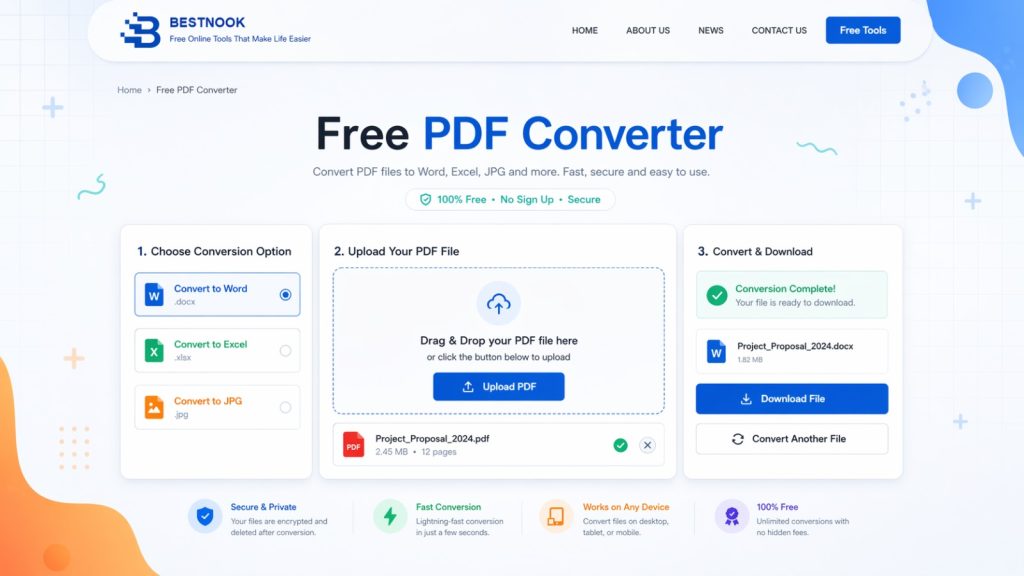
Step 1: Upload the File
Users upload a document from:
- Computer
- Mobile phone
- Google Drive
- Dropbox
- OneDrive
Step 2: File Processing
The server analyzes the file structure, including:
- Fonts
- Images
- Tables
- Layout
- Embedded elements
The converter then reconstructs the content into the selected format.
Step 3: Conversion Engine
Special algorithms process:
- Text extraction
- Image rendering
- Formatting preservation
- OCR recognition
- Compression optimization
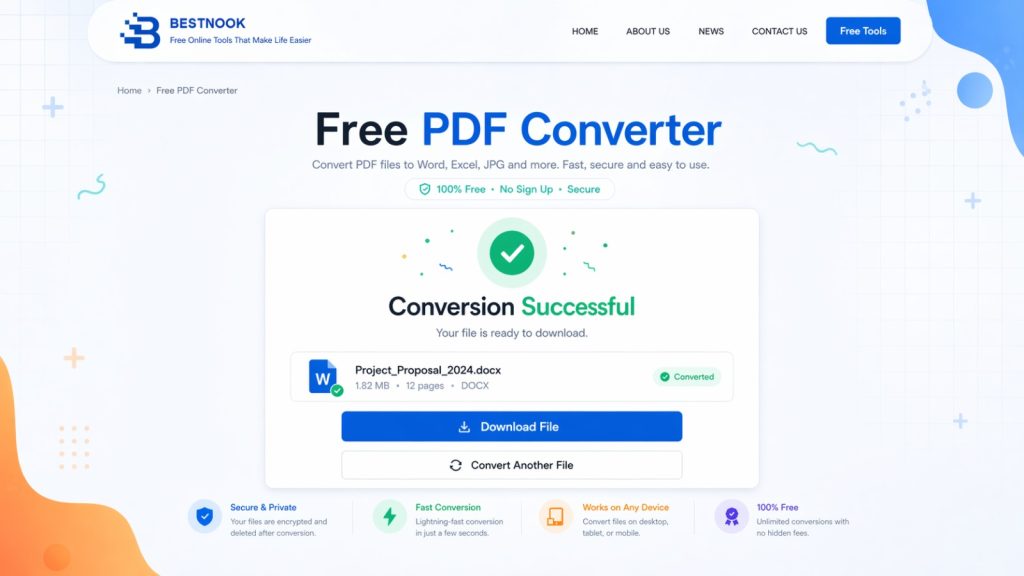
Step 4: Download the Converted File
You can download the processed file right now.
AI is being used by many modern technologies to make them more accurate, especially when working with complicated texts and scanned PDFs.
Why People Use PDF Conversion Tools
Users can pick the proper type of conversion if they know how file formats work.
Main Reasons People Convert PDFs
1. Editing Documents
PDFs are difficult to edit directly. Converting to Word allows users to:
- Change text
- Update designs
- Add information
- Fix mistakes
2. Sharing Professional Files
PDFs preserve formatting across devices, making them ideal for:
- Contracts
- Reports
- Resumes
- Ebooks
- Presentations
3. Reducing File Size
Many converters include compression features to:
- Save storage
- Improve upload speed
- Simplify email sharing
4. Extracting Data
Businesses often convert PDFs to Excel to extract the following:
- Financial tables
- Invoices
- Reports
- Analytics
5. Educational Purposes
Students use converters for:
- Assignment submissions
- Lecture notes
- Research papers
- Study materials
Common File Formats Explained
Understanding file formats helps users choose the right conversion type.
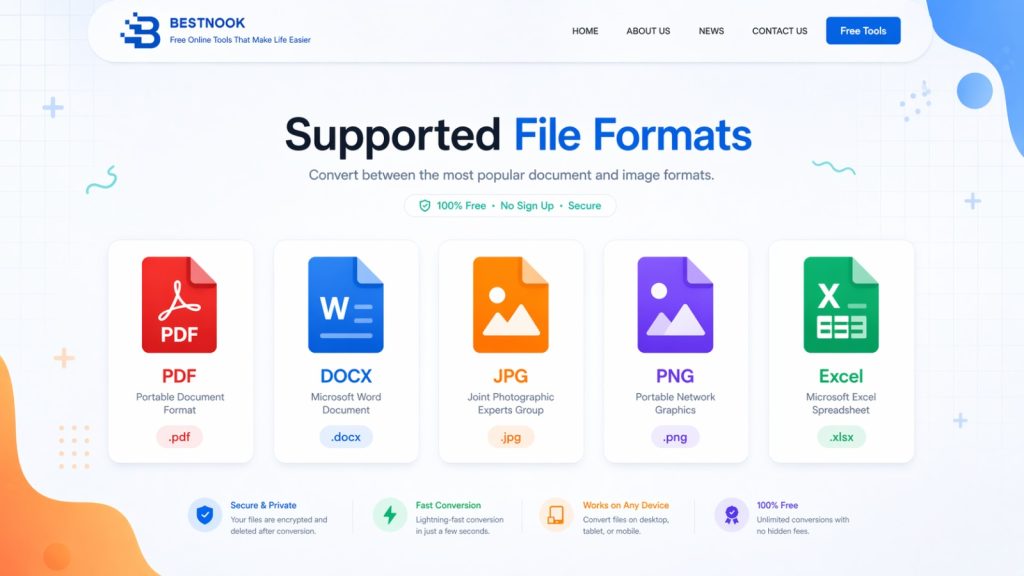
PDF (Portable Document Format)
Best for:
- Sharing finalized documents
- Printing
- Preserving formatting
Advantages:
- Universal compatibility
- Secure
- Professional appearance
DOC / DOCX (Microsoft Word)
Best for:
- Editing text
- Collaboration
- Writing documents
Advantages:
- Easy editing
- Commenting support
- Flexible formatting
XLS / XLSX (Excel)
Best for:
- Spreadsheets
- Data analysis
- Calculations
Advantages:
- Formulas
- Charts
- Structured tables
JPG / JPEG
Best for:
- Photos
- Social media images
- Web graphics
Advantages:
- Small size
- Wide compatibility
PNG
Best for:
- Transparent graphics
- High-quality screenshots
- Logos
Advantages:
- Better image quality
- Transparency support
PPT / PPTX (PowerPoint)
Best for:
- Presentations
- Slideshows
- Business pitches
Advantages:
- Visual storytelling
- Animation support
How to Convert PDF to Word (Step-by-Step)
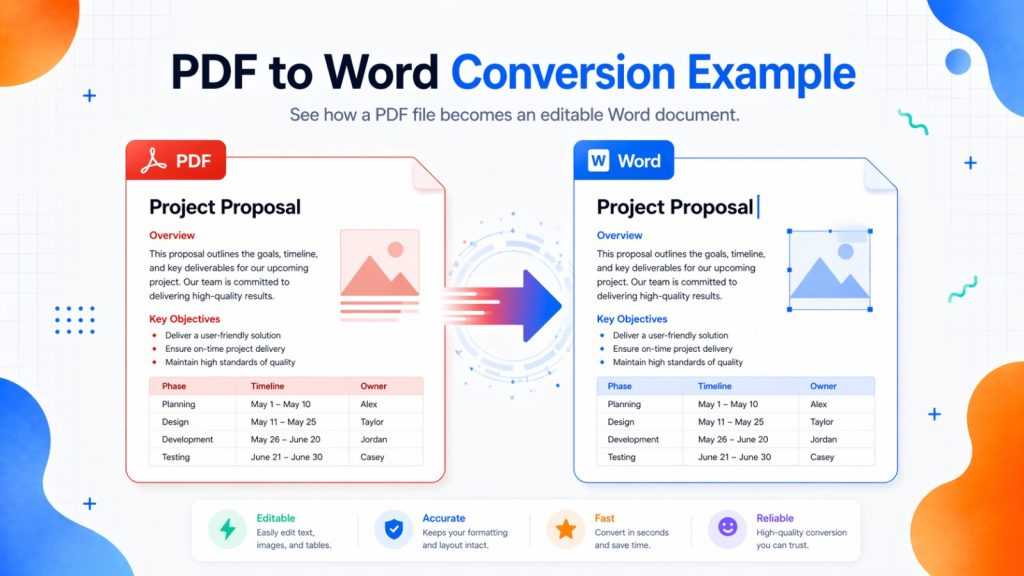
One of the most popular file conversion chores is changing a PDF file to a Word file.
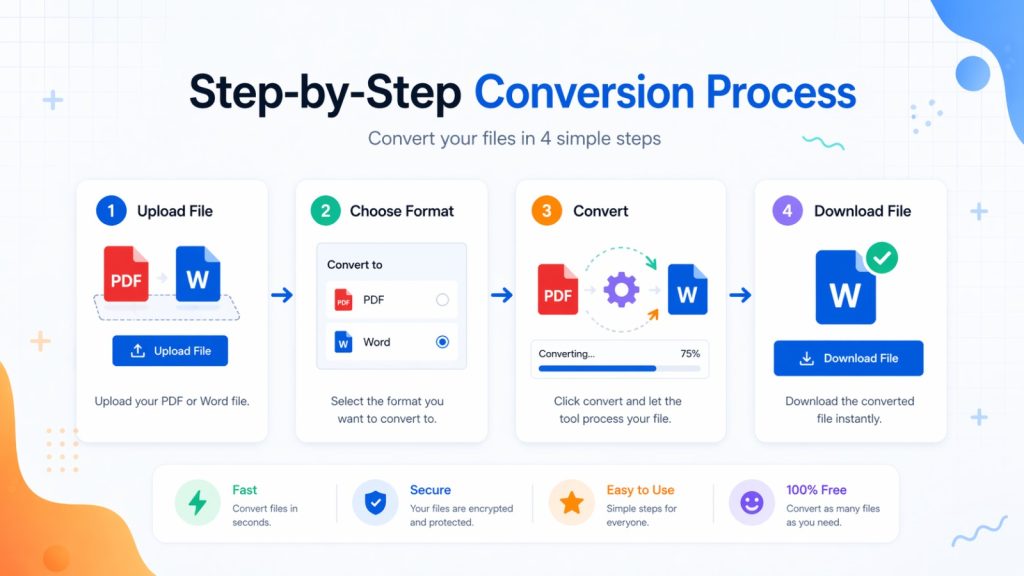
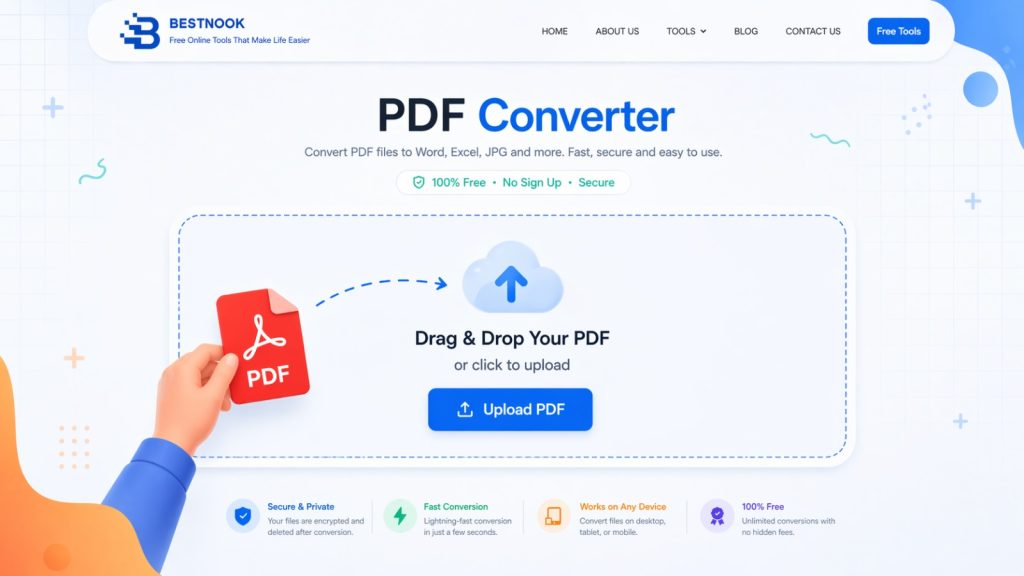
Step 1: Open a PDF converter.
Use a software program or internet tool that you can trust.
Step 2: Upload the PDF file.
Choose the file from your device or cloud storage.
Step 3: Choose “PDF to Word.”
Select output format:
- DOC
- DOCX
Step 4: Start Conversion
The system extracts:
- Text
- Images
- Tables
- Formatting
Step 5: Download the Word file.
To edit the file, open it in Microsoft Word or Google Docs.
Tips for Better PDF to Word Conversion
- Use high-quality PDFs
- Avoid blurry scanned files
- Enable OCR for image-based documents
- Check formatting after conversion
How to Convert Word to PDF Free
To share professional documents, it’s important to convert Word to PDF.
Method 1: Using Microsoft Word
Steps:
- Open the Word document
- Click File
- Select Save As
- Choose PDF format
- Save
Method 2: Using Online Converters
Steps:
- Upload a DOC/DOCX file
- Choose PDF output
- Convert instantly
- Download PDF
Benefits of Word to PDF Conversion
- Preserves formatting
- Prevents accidental editing
- Looks professional
- Compatible across devices
Convert PDFs to Excel, JPG, PNG & PPT
Modern converters can output in several different formats.
PDF to Excel
Useful for:
- Financial reports
- Accounting data
- Sales sheets
- Invoices
Key Challenge:
Keeping the table structure correct.
PDF to JPG
Useful for:
- Social media previews
- Image extraction
- Website graphics
Best For:
Sharing visual stuff.
PDF to PNG
Useful for:
- High-quality graphics
- Transparent visuals
- Design projects
Advantage:
Better quality than JPG.
PDF to PowerPoint
Useful for:
- Business presentations
- Educational slides
- Pitch decks
AI-enhanced tools can:
- Detect slide layouts
- Rebuild presentation structure
- Extract charts automatically
AI-Powered PDF Converters
AI is transforming document conversion in 2026.
Traditional converters often struggle with:
- Complex layouts
- Scanned pages
- Handwritten notes
- Multi-column formatting
AI-powered systems solve these problems intelligently.
Features of AI PDF Tools
Smart Layout Detection
AI recognizes:
- Headers
- Paragraphs
- Tables
- Columns
- Images
Context-Aware Formatting
AI doesn’t just replicate raw text; it naturally rebuilds documents.
Handwriting Recognition
Modern OCR AI can read handwritten text with amazing precision.
Language Detection
AI converters support:
- Multiple languages
- Translation workflows
- Global document processing
Benefits of AI Conversion
- Better accuracy
- Faster processing
- Cleaner formatting
- Reduced manual editing
OCR Technology for Scanned PDFs
OCR stands for Optical Character Recognition.
It converts scanned images into editable text.
Without OCR:
- Scanned PDFs behave like images
- Text cannot be copied or edited
With OCR:
- Text becomes searchable
- Documents become editable
- Data extraction becomes possible
How OCR Works
Step 1: Image Analysis
The system looks at the letters in the picture.
Step 2: Pattern Recognition
AI looks at shapes and language databases.
Step 3: Text Reconstruction
Characters change into digital text that can be changed.
OCR Use Cases
Businesses
- Invoice processing
- Record digitization
- Contract management
Students
- Scanned notes
- Printed books
- Research papers
Government & Legal
- Archive digitization
- Historical document preservation
Mobile-Friendly PDF Converters
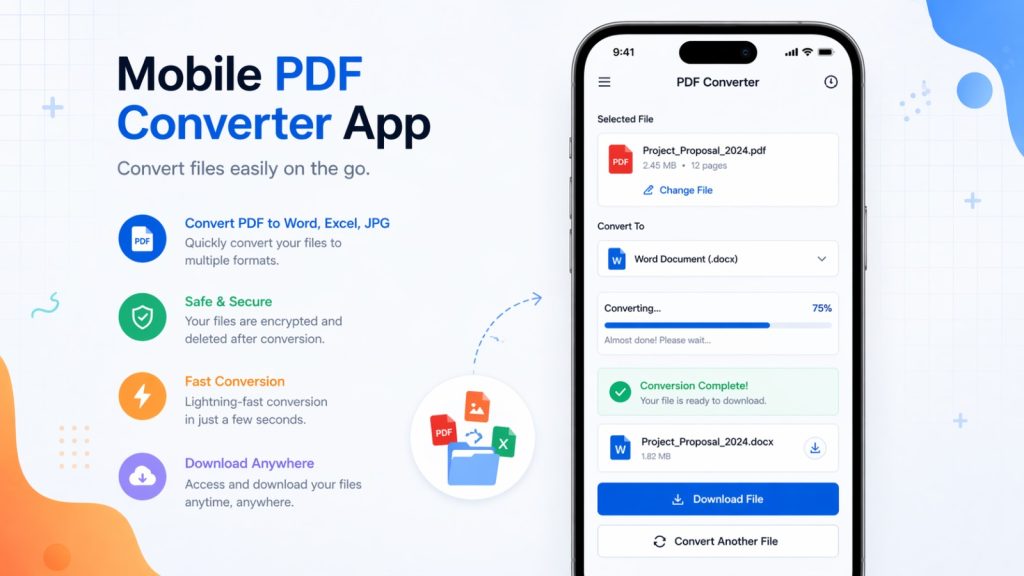
Mobile conversion tools are becoming more and more popular because more and more people work from their phones.
Features of Mobile PDF Converters
Camera Scanning
Users can:
- Photograph documents
- Convert images to PDF
- Apply OCR instantly
Cloud Sync
Apps integrate with:
- Google Drive
- Dropbox
- iCloud
- OneDrive
Offline Access
Some apps allow:
- Local conversion
- Offline editing
- Secure document handling
Benefits of Mobile PDF Tools
- Convenience
- Faster workflows
- Remote work support
- Easy sharing
Browser-Based vs Desktop PDF Tools
Both options have advantages and disadvantages.
Browser-Based PDF Tools
Advantages
- No installation
- Works on any device
- Fast access
- Cloud integration
Disadvantages
- Requires internet
- Privacy concerns
- File size limitations
Desktop PDF Software
Advantages
- Better security
- Faster large-file processing
- Advanced editing
- Offline functionality
Disadvantages
- Installation required
- Higher system usage
- Sometimes expensive
Which Option Is Better?
Use Browser Tools If You Need:
- Quick conversions
- Occasional use
- Mobile compatibility
Use Desktop Software If You Need:
- Professional editing
- Maximum privacy
- Bulk processing
- Advanced workflows
Tips to Maintain Formatting During Conversion
One of the most annoying things about converting PDFs is that they don’t always format correctly.
Best Practices
Use High-Quality Source Files
Files with low resolution cause recognition mistakes.
Avoid Scanned Documents When Possible
Native PDFs keep formatting better.
Enable OCR Carefully
OCR helps with scanned files, but it can sometimes make small mistakes.
Check Fonts
Layouts can be messed up by fonts that are missing.
Review Tables Manually
After conversion, you may need to change complex tables.
Use AI-Powered Converters
AI tools better preserve the following:
- Alignment
- Spacing
- Columns
- Images
Common Mistakes & Troubleshooting Tips
A lot of people have trouble converting because of mistakes they could have avoided.
Common Problems
Broken Formatting
Causes:
- Complex layouts
- Unsupported fonts
- Low-quality scans
Fix:
Use AI conversion or desktop software.
Missing Images
Causes:
- Corrupted PDFs
- Unsupported image layers
Fix:
Re-export the original file.
OCR Errors
Causes:
- Blurry scans
- Handwriting issues
Fix:
Use clearer scans with better lighting.
Large File Failures
Causes:
- Upload limitations
Fix:
Compress PDF before conversion.
Slow Conversion Speed
Causes:
- Large files
- Server overload
Fix:
Try desktop tools or reduce file size.
PDF Privacy & Security Best Practices
When you upload sensitive files online, privacy is very crucial.
Security Risks
Potential risks include the following:
- Data leaks
- Unauthorized access
- Cloud storage vulnerabilities
Best Security Practices
Use Trusted Tools
Choose reputable platforms with:
- HTTPS encryption
- Security certifications
- Transparent privacy policies
Avoid Uploading Sensitive Documents
Avoid online tools for:
- Banking records
- Legal contracts
- Medical documents
Use offline software instead.
Delete Uploaded Files
Some software automatically removes files after they are done processing, but it’s safer to delete them yourself.
Use Password Protection
Before sharing, protect PDFs with passwords.
Enable Two-Factor Authentication
Very critical for PDF platforms that are connected to the cloud.
Real-World Use Cases
People in many different fields around the world utilize PDF converters.
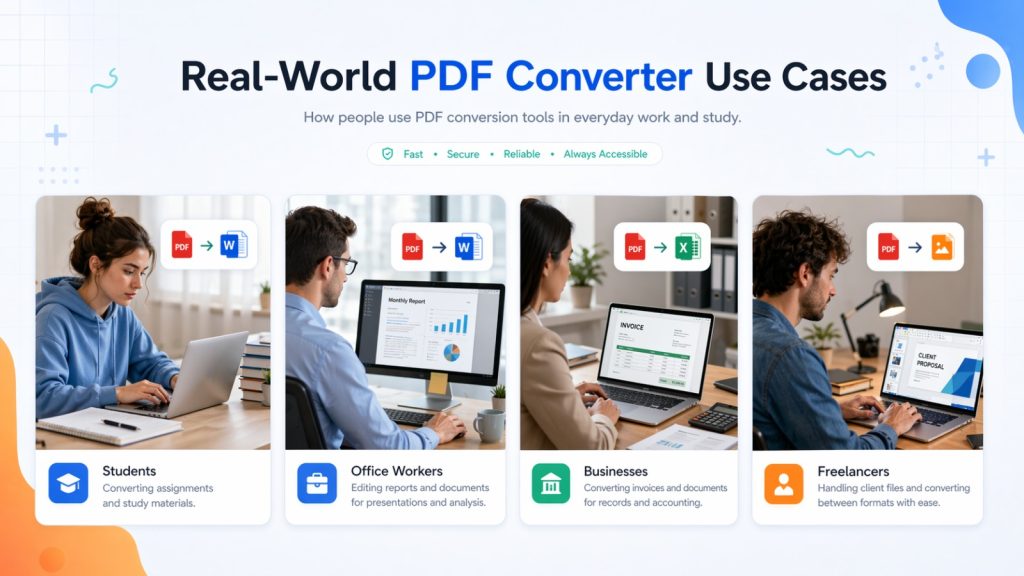
Education
Students and teachers convert:
- Lecture notes
- Assignments
- Research papers
- Study guides
Business
Companies convert:
- Reports
- Contracts
- Invoices
- Presentations
Freelancing
Freelancers use PDF tools for:
- Client proposals
- Portfolios
- Contracts
- Digital products
Marketing
Marketers convert:
- Lead magnets
- Ebooks
- Media kits
- Presentations
Healthcare
Hospitals digitize:
- Patient records
- Medical reports
- Scanned prescriptions
Legal Industry
Law firms process:
- Agreements
- Court files
- Signed contracts
- Legal archives
Final Thoughts
In 2026, PDF converters are very important tools for getting work done. Modern PDF conversion technology enables it to be faster and smarter than ever to edit documents, get data out of them, distribute professional files, or turn paper records into digital ones.
AI-powered converters and OCR technology are changing the way people handle digital documents by making them more accurate, keeping their formatting, and automating workflows.
Browser-based tools are quick and easy to use for people who don’t use them often. Desktop software gives professionals more control and security when working with important or complicated information.
Choosing the right PDF converter depends on your specific needs, including:
- File type
- Security requirements
- Editing complexity
- Device compatibility
- Conversion accuracy
PDF converter tools will always be an important part of daily life for students, businesses, freelancers, and organizations around the world as digital work grows.
Frequently Asked Questions
What is the best free PDF converter in 2026?
The ideal converter for you will depend on what you require. AI-powered tools usually do the greatest job of formatting and OCR.
Can I convert a PDF to Word without losing formatting?
Yes, especially when you use high-quality PDFs and AI-powered technologies to convert them.
Tools with encryption that you can trust are usually safe, but it’s best to keep crucial papers offline.
What is OCR in PDF conversion?
OCR (Optical Character Recognition) changes scanned pictures into text that can be edited and searched.
Can I convert PDFs on mobile devices?
Yes. Most PDF converters that are made today work with both Android and iPhone.
Why does formatting break during conversion?
Most of the time, formatting problems happen:
- Layouts that are hard to understand
- Fonts that aren’t there
- Scans that aren’t very good
- Elements that aren’t supported
Which is better: online or desktop PDF converters?
Online tools are easier to use, but desktop software is preferable for privacy and more advanced editing.
Can AI improve PDF conversion accuracy?
Yes, AI-powered converters make it much easier to choose the right layout, read text correctly, and keep the formatting.